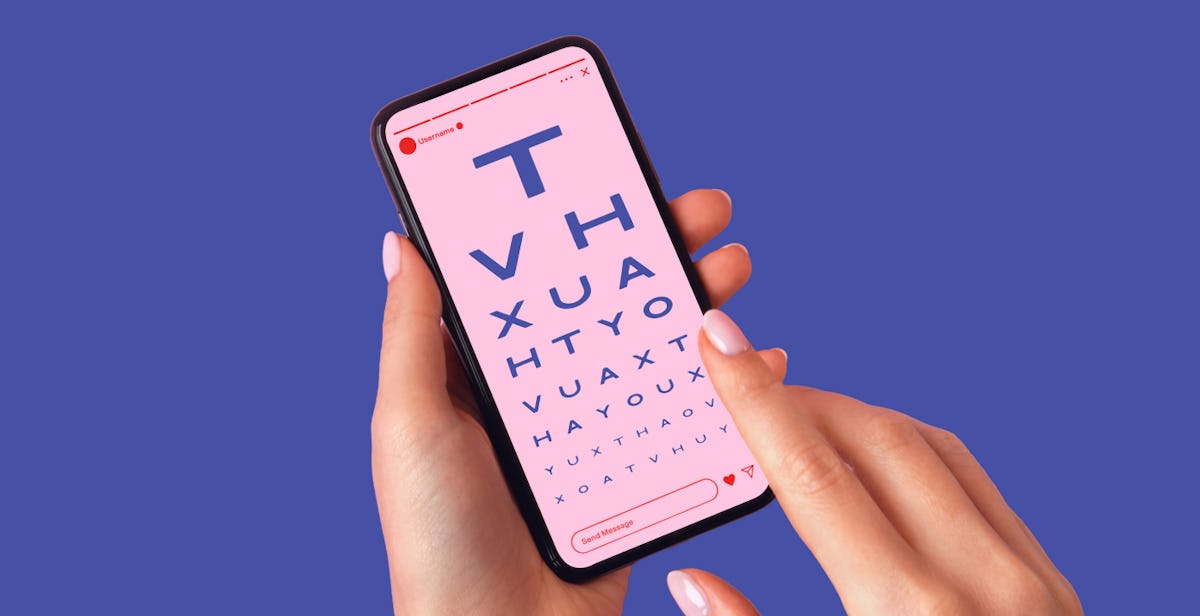
You tap on your friend’s Instagram story, expecting the usual: a cute brunch pic, a vibey sunset. But wait—what’s this? You squint, lean in closer to your screen, and practically hold your breath like you’re diffusing a bomb. Why? Because the text slapped onto the story is so microscopic it Might as well be written in Morse code. Sound familiar? Welcome to the new, maddening trend of tiny Instagram story text—a phenomenon that’s sweeping social media and leaving us all wondering: why are people doing this?
Why Instagram Story Text Is Getting So Much Attention Right Now
According to recent chatter across social media and experts studying online behaviors, tiny text isn’t just an aesthetic choice—it’s a statement. A 2026 study from Instagram’s VP of Product, Tessa Lyons-Laing, confirms that micro-text plays into Gen Z’s obsession with subtle “IYKYK” vibes. Think of it like a whisper: intimate, private, and for those curious enough to lean in. But the real kicker? Tiny text isn’t just about aesthetics; it’s about vulnerability—shrinking your feelings into a font size so small, it feels less exposing.
And it’s working. Comedians like Evan Lazarus call it “an art form of being annoying,” while cultural critics liken its cryptic nature to a gossipy Bat-Signal. The smaller the text, the higher the barrier of entry, which gives posters permission to say something real without shouting it to the world. But here’s the twist: that very exclusivity is what makes us zoom in and screenshot anyway.
It’s a Window Into Vulnerability — What Most People Miss
Here’s the surprising truth: tiny Instagram story text isn’t just about aesthetics; it’s a subtle cry for connection. According to Abigail Mlinar Burns, a cultural commentator, shrinking your font size is like using a “small voice”—a way to share personal thoughts without demanding attention. It’s the closest thing to a digital whisper, offering the viewer a choice: engage deeply or just glance and move on.
The takeaway? Vulnerability feels safer at smaller scales. When someone reduces their text size, they’re creating a buffer between their emotions and the people consuming them. That’s why micro-text often accompanies journal-style rants, cryptic thoughts, or raw feelings—it’s intimate without being overwhelming.
Actionable tip: The next time you feel tempted to shrink your text size as a shield, instead try posting on an app like Bumble. Its low-pressure vibe lets you say something honest without playing hard-to-read games.
How to Actually Make Tiny Text Work
Want to lean into the trend without driving your followers to eye strain? Here’s how to do it right:
- Use contrast: Pick a text color that pops against the background. Tiny white text on a bright image? Unreadable. White on black? Golden.
- Keep it short: Micro-text works best for bite-sized thoughts or punchy one-liners. A novel in size 8 font? No thanks.
- Layer wisely: Avoid busy backgrounds. A clean, neutral backdrop ensures your miniature prose doesn’t look like hieroglyphics.
- Add context: Pair your tiny text with an emoji or visual hint that gives readers a clue about what they’re squinting at.
- Test the waters: Post one story with readable text alongside your tiny type experiment—see which gets better engagement.
The Mistake That Holds Most People Back
Here’s the trap most people fall into: thinking micro-text is a shortcut to looking deep or artistic. Spoiler alert—it’s not. If the content of your post isn’t compelling, shrinking the font size won’t make it any more interesting. In fact, it might have the opposite effect: your followers swipe away faster than you can say “Helvetica.”
Alvaro Chavez, an actor and comedian, views tiny text as a gossipy Bat-Signal that should still respect the viewer’s time. “If you’re making me squint, at least make it worth the effort,” he says. Translation? Your tiny-text post should either be funny, meaningful, or intriguing. If it’s not, bump up the font size or rethink the content altogether.
Here’s What Experts Actually Say
Research backs up the psychology behind this trend. According to Lyons-Laing at Instagram, tiny fonts are part of a broader shift toward performative nonchalance—a way to make vulnerability feel less cringe. Similarly, Abigail Mlinar Burns likens it to whispering in a crowded room. It’s intimate, but not invasive.
Studies show that micro-text posts also boost engagement. Evan Lazarus explains that the effort required to read small text forces viewers to pause, zoom in, and screenshot—boosting the algorithmic visibility of the post. Think of it like playing hard to get, but for your Instagram story.
Final Thought: What Does Your Tiny Text Say About You?
So, what’s the deal with your microscopic Instagram story font? Is it an artistic choice, a stealthy confession, or just plain annoying? Whatever your motivation, one thing is clear: it reflects the fractured, hyper-curated nature of how we express ourselves online. Tiny text invites curiosity but can also repel engagement if overdone.
Here’s a challenge: next time you feel tempted to post in micro-text, ask yourself what you’re Really trying to say—and who you want to say it to. If you’re ready to share something vulnerable, be bold. Bump up the font size. Give your thoughts the space they deserve. Or, as Mlinar Burns suggests, start a Substack. Because sometimes, the loudest thing you can do is just speak up.